
My study structure
Author: Mukund Shyam
Published on: 16 07 2023
I pride myself on my ability to prioritize things (fairly) well.
The last few years, I’ve increased the number of things I do quite a lot. I started a YouTube channel, I began to maintain a blog, I started to learn how to code, and so much more. Yet, I’ve been able to keep on top of my academics.
The main reason for this is the system I’ve built to help me study.
Having a reliable system is a lifesaver. If you have a set plan for how you will attack the year (or exam series) ahead, you will definitely be on the path to success, and time to do other things (whether that’s extracurricular activities or just sleeping properly) will automatically open up.
The Principles
There are three main principles I kept in mind when I designed this system.
First of all, the system had to incorporate active recall. Easily the most effective study method, active recall involves the student (in this case, me) trying to actively retrieve information from their long-term memory. This helps train said student to perform well in an exam setting (in which the entire objective is to retrieve information).
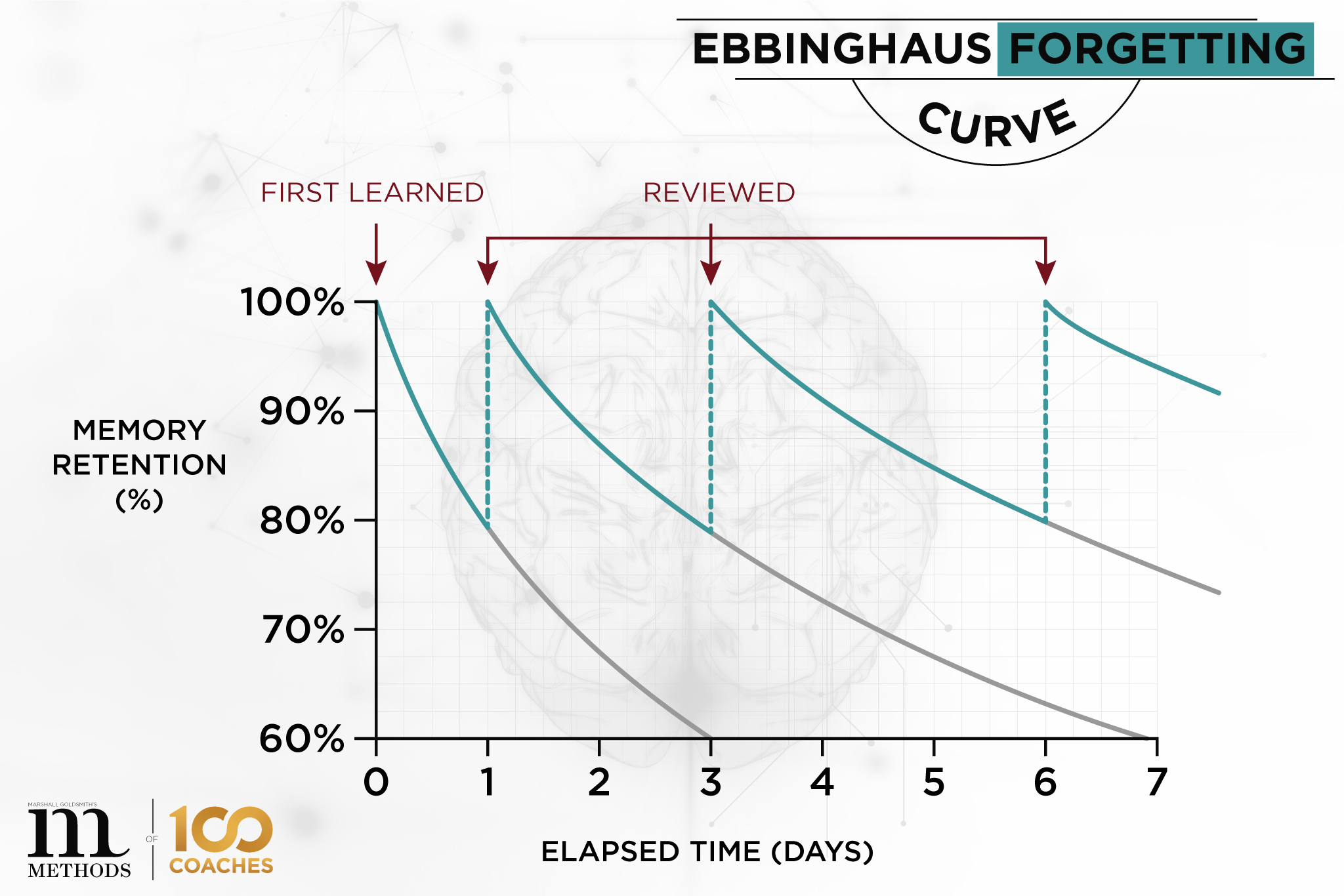
Second of all, the system had to incorporate spaced repetition. Another evidence-based method of studying, spaced repetition (as the name suggests) involves repeating topics at increasing intervals; that is, repeating it after a week, then after two weeks, then after a month and so on (for example). This method intends to break the “forgetting curve” theorized by German psychologist Hermann Ebbinghaus, and help lock information in long-term memory. [Image source: https://methodsof.com/blog/the-ebbinghaus-forgetting-curve/]
Thirdly, the system had to be cross-platform. I wanted my system to work on my iPad, my computer, and my phone because I didn’t really like sitting in one place and working; I wanted to be able to move around and work in different places. This didn’t affect the system’s overall workings, so to speak, but more affected the tools I used.
The System
When I start studying, my first step is to review the topic. For me, before I begin to try and memorize things, learning what the topic is actually about is extremely important. If I understand what I actually learnt (whether that’s genetics or the production function), I find it a lot easier to remember information and write better, more in-depth answers. During this stage, I highlight important terms and critical pieces of information, and in the case of history (where it’s critical to separate the wheat from the chaff, so to speak), I make notes that’s (importantly) extremely focused and condensed.
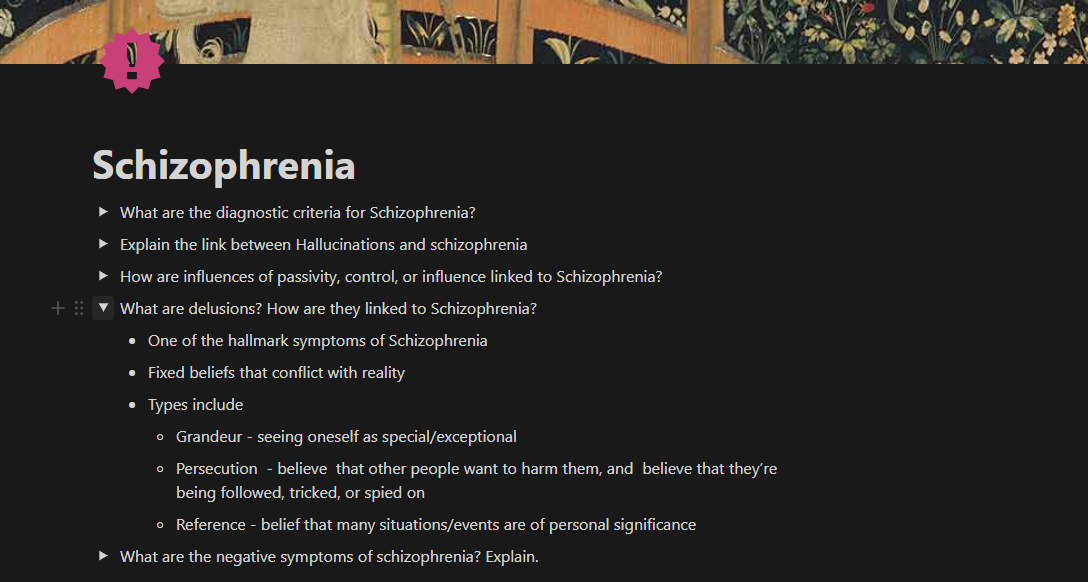
At this point, I also start creating my revision materials. I use Anki, first of all, as my flashcard app of choice mainly because it has spaced repetition built in. Anki is the storehouse of all the hard facts (numbers, examples, lists etc.) that I need to remember. Whenever I come across a hard fact (for example, the number of people unemployed in Germany in 1928), I create a flashcard on Anki. Notion is the other “hub” of my system. On Notion, I do one thing and one thing only: I write down questions (both potential questions that can come for the exam and questions that require me to think about the content) and the answers to those questions (in a toggle-list).
Finally, after I finish reviewing a particular topic, I write down the name and the date on an Excel sheet.
Next, the revision process begins. The revision process primarily uses the two “hubs” of my system: Anki and Notion. I initially read through a particular topic, then I answer the questions written on Notion about it. Anki is a more “free” system; I answer Anki questions based on what the app wants me to review!
After this, I write down the date on which I revised that particular topic in the excel sheet, and I colour code it based on my confidence in the topic from red (completely unconfident, don’t know anything) to green (can write the exam on this topic right now).
This process is then repeated, with the red-coded topics revised first, the orange-coded ones second and so on. The revision “ends” when everything is coded green.
In case there are multiple red-coded topics, the topic that should be revised is the one that was looked at the longest ago previously.
This is the main system!
There are extra “plug-ins” (so to speak) for different subjects as well, though, from exercises and board-paper questions for math to essay plans and timelines for history.
I hope this was useful as a starting point for you to create your own system for managing academics! Keep in mind that something that works for me may not necessarily work for you, and vice versa. Try to come up with something that’s effective, efficient, and fun!
That’s all for this week. Thank you for reading!